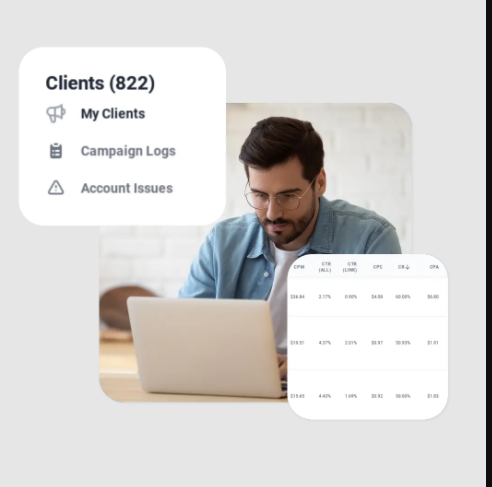
Staring at a blank Ads Manager dashboard, waiting for inspiration to strike, is a familiar kind of pain for anyone who manages marketing campaigns.
You know the drill. You have a client who needs fresh leads, or your own business needs a quick pipeline boost. So, you sit down, open up a spreadsheet, stare at a blinking cursor, and wonder how to reinvent the wheel—again. Writing ad copy, designing variations, mapping out target audiences, and setting up tracking templates eats up hours you could be spending actually talking to clients or closing deals.
Scaling paid traffic has always come with a frustrating bottleneck: execution takes too long.
If you run an agency, manage multiple brands, or find yourself constantly spinning up new funnels, efficiency isn’t just a nice perk. It is the difference between profit and burnout. That is the exact problem tools like UpHex set out to solve. Instead of treating ad creation like a tedious, manual craft, it looks at the process through a systems lens.
Let’s take a closer look at what UpHex brings to the table, how it changes the daily workflow of building a winning campaign, and whether it deserves a spot in your tech stack.
The Real Bottleneck in Paid Media
Most marketers don’t fail because they don’t understand marketing. They fail because they get bogged down in the mechanics of launching ads.
Think about what it takes to launch a standard local lead-generation campaign from scratch:
- Brainstorming angle variations.
- Writing distinct ad sets for Facebook and Instagram.
- Designing or sourcing visual assets.
- Setting up custom conversions and lead forms.
- Pushing everything live inside the ad platform.
Now, multiply that by five, ten, or fifty clients. Suddenly, your week is gone.
This operational weight is why traditional agencies hit a hard ceiling. You can only manage so many accounts before the quality of your work starts to slip or you have to hire more media buyers.
A reliable ad campaign generator changes this math entirely. By turning repeatable campaign structures into plug-and-play templates, you stop building from scratch every single time.
What Makes UpHex Different?
UpHex isn’t trying to be another bloated, all-in-one marketing suite that tries to do everything and masters nothing. It focuses on a very specific niche: helping agencies, SaaS companies, and entrepreneurs deploy repeatable, high-performing Facebook and Instagram ad campaigns directly inside high-level CRM platforms like GoHighLevel.
Instead of jumping between the native Meta Ads Manager and your CRM, UpHex bridges the gap. It brings the campaign launch process right where you already manage your leads and clients.
Here is how the core philosophy works in practice:
1. Template-Driven Execution
You don’t need to reinvent the wheel for a dentist, a roofer, or a fitness coach. UpHex provides pre-built, proven templates. These aren’t just generic copy blocks; they are complete campaign frameworks designed around specific business outcomes.
2. White-Label Simplicity for Agencies
If you run an agency, client communication is half the battle. Clients often struggle to understand native ad platforms. UpHex allows you to offer a simplified dashboard where your clients can launch pre-approved ads with just a few clicks. It keeps them happy, keeps them feeling involved, and keeps them off your back.
3. Speed Over Complexity
By cutting down the time it takes to spin up a new test, you can experiment more often. And in the world of paid advertising, the person who can test new angles the fastest usually wins.
Building Your Next Campaign: A Step-by-Step Workflow
Let’s walk through what it actually looks like to build a campaign using this kind of streamlined workflow, moving away from the old manual grind.
Step 1: Choose Your Objective
Every good campaign starts with a clear goal. Are you driving local foot traffic? Collecting phone numbers for a sales team? Selling an e-commerce product?
With a template-backed system, you select the category that matches your offer. Because the heavy lifting—like compliance checks, basic targeting parameters, and structure—is already handled, you skip the setup paralysis.
Step 2: Customize the Creative
Templates give you a strong foundation, but personalization makes it convert. Swap out the placeholder imagery for client-specific photos or videos. Tweak the headline to match a specific local offer or seasonal promotion.
The goal here isn’t to write a masterpiece from a blank page. It’s to take a proven framework and tailor it to the exact audience in front of you.
Step 3: Set Your Budget and Launch
Gone are the days of messing around with broken pixel setups or confusing campaign objectives in the native dashboard. With streamlined tools, you define your daily spend, select your connected page, and push the campaign live.
Everything routes back to your core CRM automatically, ensuring leads don’t slip through the cracks.
Who Is This Actually For?
Not every tool is right for every business. If you are a solo freelancer managing a single brand with a static product, a specialized deployment platform might be more than you need.
However, UpHex and similar systems shine brightest for specific groups:
- Marketing Agencies: If you want to scale your client roster without dramatically increasing your headcount, systemizing your ad launch process is mandatory. Giving clients a self-serve portal for proven ad templates is a massive differentiator.
- SaaS and Software Resellers: If you build sub-accounts for users on platforms like HighLevel, adding a built-in advertising module dramatically increases the perceived value of your software.
- Multi-Location Businesses: Franchises and businesses with multiple physical branches need consistency. They can’t have local managers guessing how to write ad copy. Centralized templates ensure brand safety and consistent lead flow.
The Pitfalls to Avoid When Automating Ads
Automation and templates are incredible leverage, but they aren’t magic bullets. If you rely entirely on templates without paying attention to the fundamentals, your results will suffer.
Keep these three rules in mind, no matter how fast you can launch a campaign:
- Creative is Still King: No software can save a boring offer or terrible imagery. Templates give you speed, but your unique hook and visual assets grab attention. Spend your extra time working on great creatives.
- Targeting Still Matters: While Meta’s algorithmic targeting has gotten remarkably smart, you still need to point the traffic in the right general direction—especially for local businesses. Don’t set it and completely forget it.
- The Follow-Up Wins the Deal: Generating a lead is only half the battle. If your CRM automation, SMS response time, and sales follow-up are slow, even the best-crafted campaign will fail to produce real revenue.
Bringing It All Together
We are past the era where spending hours manually building individual ad sets inside a clunky manager proves your worth as a marketer. Clients don’t pay you for the hours you waste wrestling with software settings; they pay you for results, growth, and peace of mind.
By leaning on a structured ad campaign generator and workflow system, you shift your energy from mechanical busywork to strategic thinking. You spend less time staring at a blank screen and more time testing new angles, improving funnels, and growing the bottom line.
If your current campaign setup feels heavy, slow, or difficult to scale, it might be time to rethink your infrastructure. Build systems that let you move fast, test often, and focus on what actually moves the needle.